ServicesWindshield Protection Film
Windshield Protection Film in Antelope
We apply a clear film to the outside of your windshield that absorbs impacts. Rock hits and sand pitting land on the film instead of chipping the glass, and once it wears out we strip it and put on fresh film rather than replace the windshield.
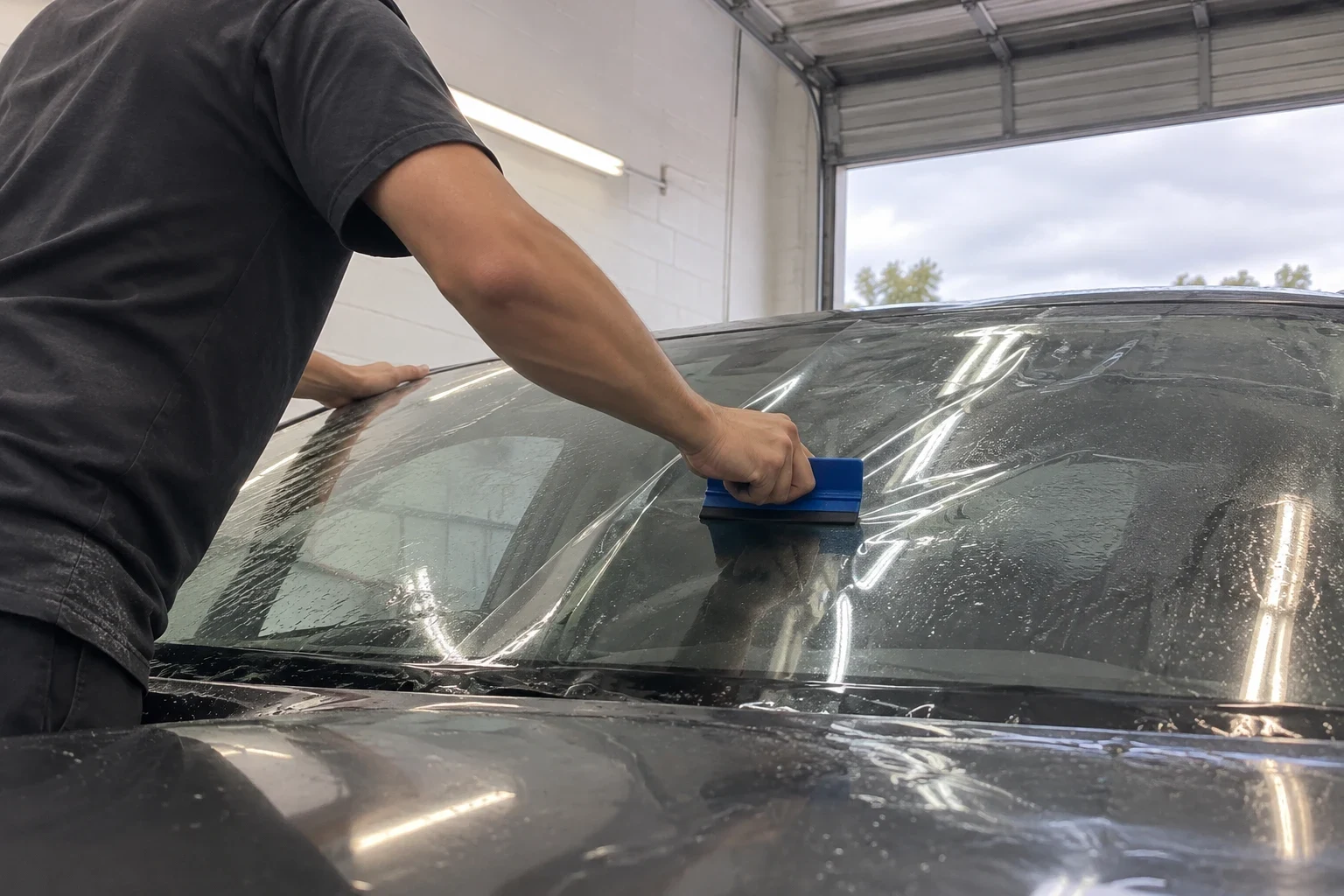
A Replaceable Layer Over Your Windshield
This is a thin, clear film made of several layers under a hard top coat. When a stone thrown by the car in front strikes it, the film gives and spreads the force out before it gets to the glass. A hit that would crack bare glass into a star or bullseye usually leaves only a mark in the film, if anything.
It is not tint and does not make the glass darker. It blocks UV, which helps shield the dash and the driver, and it holds up against the fine pitting from road grit and dry wiper strokes that causes glare when you face a low sun.
Install it while the windshield is still unmarked, on a new car or just after a glass replacement. Many newer cars need the forward camera recalibrated when the windshield is replaced, which makes keeping the original glass in one piece worth planning for.
What the Install Includes
- Glass inspection
- We check the windshield under shop lighting for existing chips, pitting and wiper haze before any film goes on. Film seals over damage but does not repair it, so you'll know what you're starting with.
- Decontamination
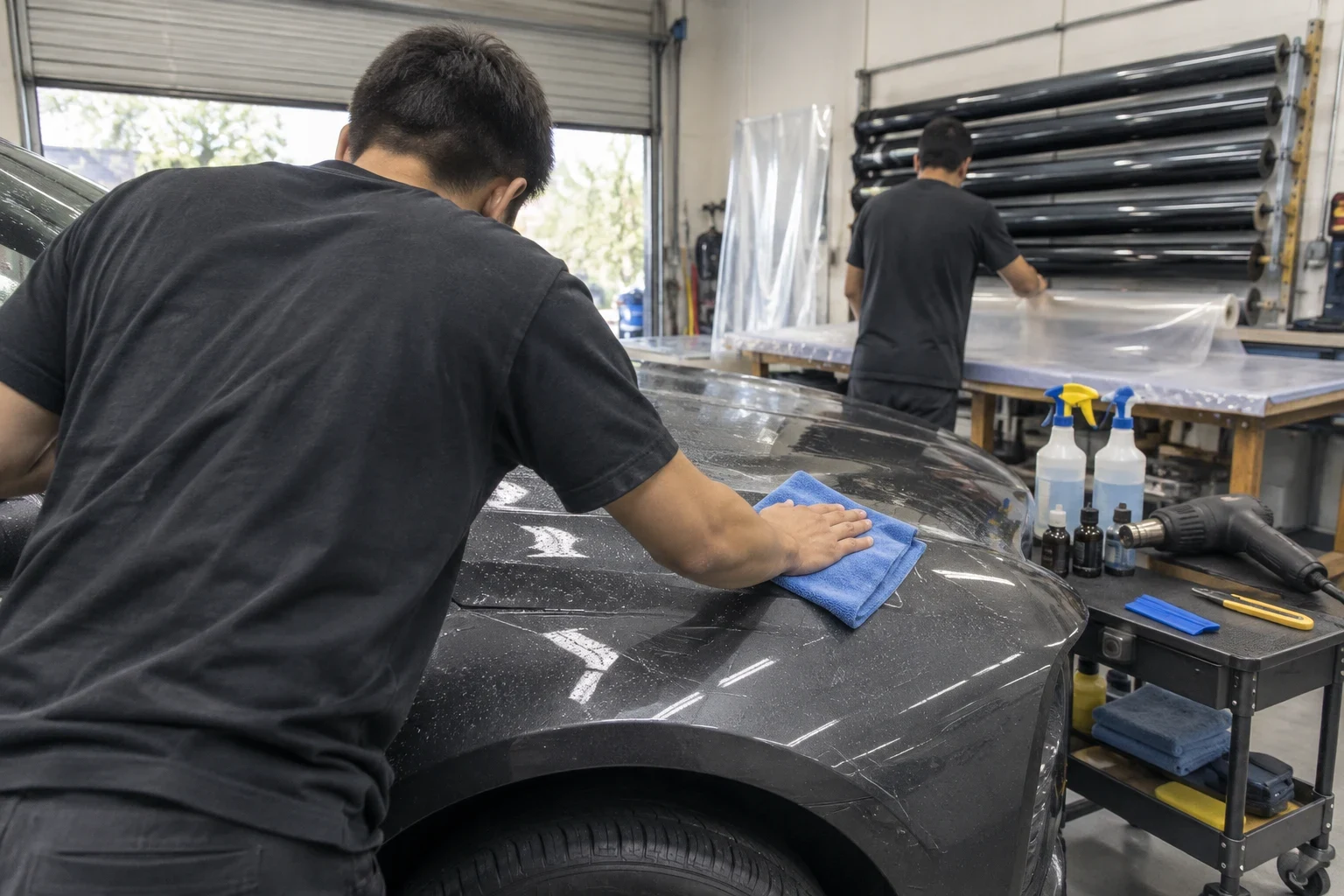
- The outer glass is washed, clay-treated and wiped with a degreaser. Any trapped grit or old wax shows up later as a bubble or a speck, so this step takes real time.
- Precision fit around the frit
- Most windshields have a black ceramic dot border, called frit, around the edges. We shape the film to the glass curvature and trim it to sit cleanly at that edge, where lifting usually starts.
- Camera and sensor areas
- Forward cameras, rain sensors and light sensors read through the glass. We keep the film smooth and distortion-free across those zones and check the windows in front of each sensor after the install.
- Cure and care notes
- You leave with clear instructions on washing and wiper use while the adhesive finishes curing, and what to expect if you see light haze in the first days.
Signs It's Time to Protect the Windshield
You just bought the car
Factory glass is in its best condition the day you take delivery. Film it now and you never have to look past the first chip.
You've already replaced one windshield
If gravel has cost you a windshield before, your commute or route is likely to do it again. Film on the new glass changes what the next rock costs you.
Your car has a camera behind the mirror
Lane-keeping and automatic braking systems often need recalibration after glass replacement. Avoiding a replacement avoids that extra step.
Freeway miles behind trucks
Long runs behind gravel haulers and work trucks on the freeway put steady stone hits on the glass. Daily drivers into Roseville or Rocklin rack these up fast.
Haze when driving into the sun
Fine pitting scatters light. If you can already see it, the glass is wearing and a film layer will slow further damage, though it won't erase what's there.
What Sets the Price
We price windshield film by the vehicle, and the glass accounts for most of the difference. Once we hear about the car and its windshield, we give you the figure by phone, so pickup holds no surprises. Booking it with other work can also shift how the day is planned.
Glass size and shape
A big, sharply sloped truck or SUV windshield uses more film and needs more shaping than a compact sedan's glass.
Which film
Thicker film, and film with a tougher top coat, takes harder hits and stands up to wipers longer, and it costs more.
Cameras and mounts
Camera housings, rain sensors and heated wiper areas mean more precise trimming and more time checking the work.
Adding other work
The gravel that hits the glass hits the hood too, so many owners add paint protection film there on the same visit. That PPF comes with a 10-year manufacturer warranty.
How Your Install Day Runs
- 1
A phone consultation first
We ask about your car, the miles you put on it and the current state of the glass. From that you get a quote and an appointment that works around your week.
- 2
Arrival and glass walkaround
When the car arrives, we look over the windshield together under shop lights. Any chips or pitting get pointed out, and we confirm where the camera and sensors sit before work begins.
- 3
Prep and install
The windshield is cleaned and decontaminated, then the film is shaped to the curve and applied. Our lead installer has 15 years of experience, and windshields are where that patience shows.
- 4
Final check and pickup
We look through the film from the driver's seat and from outside, at several angles, checking clarity and the edge seal. Then we go over cure time and care before you head out.
Windshield Film Questions
Will the film affect my view or night driving?
A properly installed film is optically clear and should not add distortion or glare. We check it from the driver's seat before you leave. If you notice anything odd in the first days, bring it back and we'll look.
Is windshield film legal in California?
This film is clear and does not darken the glass, so it is not treated like tint. California restricts tinted film on the windshield. If you're also thinking about a shaded strip across the top or window tint on the side glass, we'll go over what the law allows during your consultation.
Will it stop every crack?
No. It handles the small, fast stones that cause most chips and it stops pitting. A large rock or a hit at the glass edge can still crack the windshield. We'd rather tell you that up front than oversell it.
Can you film a windshield that already has a chip?
We can, but the chip stays under the film and can still spread. Have it repaired by a glass shop first if you can, then bring the car in. We'll note any existing damage at inspection.
What happens when the film wears out?
Wipers and road grit slowly wear the top layer, and a hard strike may leave a mark. When it's no longer clear enough, we remove the old film and install new, and the glass underneath stays original.
How long have you been doing this?
We've been in business for 6 years, all of it in this shop, working on everything from daily commuters to weekend cars.
Shield Your Windshield Ahead of the Next Stone
Let us know what you drive and how much, and we'll walk you through the right film and what installing it takes. Drivers visit us from Antelope, Citrus Heights and surrounding towns.