ServicesPaint Protection Film
Paint Protection Film in Antelope
Paint protection film is a clear urethane layer that takes the rock chips and etching your factory paint would otherwise absorb. We help you pick the right coverage, prep the paint and install it at our shop, ideally before the first chip shows up.
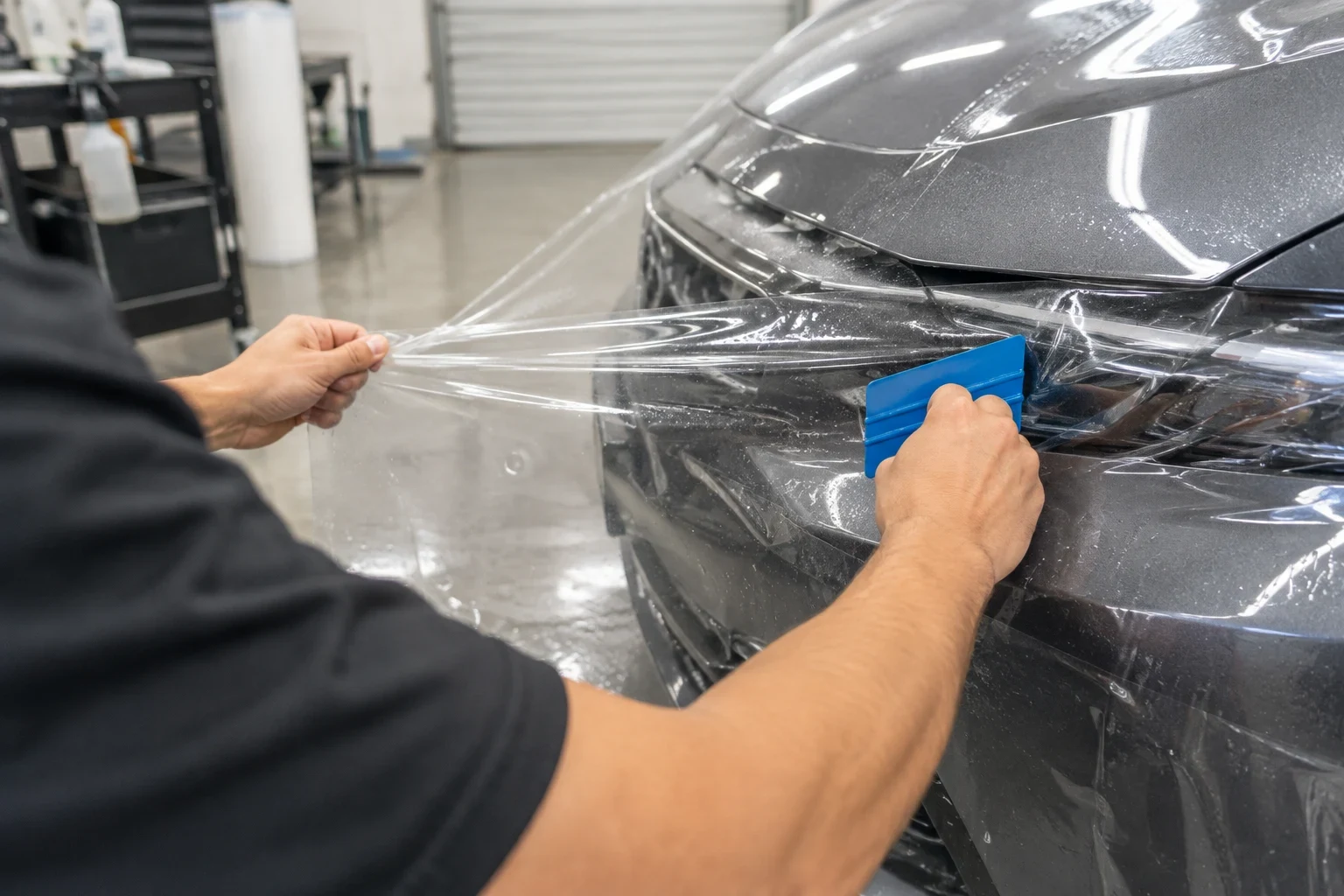
What paint protection film actually does
Modern clear coat is thin, often less than the thickness of a sheet of paper. A pebble kicked up at highway speed cracks through it and exposes the color coat, and once that happens the only real fix is paint. Paint protection film, also called clear bra, is a thermoplastic urethane film roughly 8 mils thick with an elastic body that spreads that impact out instead of letting it reach the paint.
The top layer is a self-healing coat. Fine swirls and light scuffs from wash mitts or fingernails around door handles flatten out with heat from the sun or warm water. The film is optically clear, so the paint underneath looks the way it did the day you covered it.
The best time to install is while the paint is still clean, so we encourage planning PPF around a new car purchase or right after a paint correction. Our shop opened 6 years ago. The person shaping film around your bumpers, hood and mirrors is our lead installer, who has 15 years of experience with this work.
What's included with a PPF install
Coverage planning
We look at how you drive and walk you through options: partial front, full front, track pack or full body. A daily commuter and a weekend canyon car need different coverage.
Wash and decontamination
The car gets a full wash, iron removal and clay treatment so grit and embedded contamination are lifted off the paint before any film goes down.
Paint correction where needed
Film locks in whatever is underneath it, swirls included. If the paint has defects, we tell you before we start and polish it out if you choose.
Precise fitment
Pieces are cut to fit the panel, and edges are wrapped around panel ends where the design allows so the seam is hidden and less likely to lift.
Final inspection and care notes
We check every edge under shop lighting before you pick up, then go over washing and cure instructions so the adhesive sets properly.
Signs it's time to protect your paint
You just took delivery
A new car has the cleanest paint it will ever have. Covering it now avoids paying for correction later.
Chips are starting on the bumper
Small white specks on the front bumper and hood leading edge mean the clear coat is already being hit. Film stops it from getting worse, and minor chips can be touched up first.
You spend a lot of time on the freeway
Long commutes behind trucks throw gravel and sand at the front end every day. The more highway miles, the stronger the case for full front coverage.
Bug and bird marks keep etching
Bug remains and bird droppings are acidic and bake into clear coat quickly in Sacramento Valley summer heat. Film gives that acid something sacrificial to sit on.
You plan to sell or return a lease
Clean, chip-free paint helps resale value and lease turn-in inspections. The film can come off later and leave the original paint underneath.
How a PPF job runs at our shop
- 1
Consultation and paint check
You bring the car in and we inspect the paint under good light, noting chips, swirls and any prior repaint. We agree on coverage and give you a quote.
- 2
Prep
Wash, decontamination and any paint correction you approved. Panels are wiped with an alcohol solution so the adhesive bonds to bare clear coat, not wax.
- 3
Install
Each piece is laid on with a slip solution, positioned, then squeegeed out to push water and air from under the film. Badges or trim may be removed where it gives a cleaner edge.
- 4
Cure and pickup
We let the adhesive set before you leave and inspect the edges again. Small water pockets can show for a few days and normally dry out on their own as the film cures.
What moves the cost of paint protection film
PPF is priced by how much of the car you cover and how much work it takes to get there. Two cars with the same coverage can quote differently because of bumper shape or paint condition. We explain each line on the phone or at the shop so nothing surprises you later.
- Coverage area
- A partial front package uses far less film and labor than full front or full body. Many owners start with the impact zones and add panels later.
- Vehicle shape
- Aggressive bumper intakes, parking sensors, deep curves and complex mirrors take more time to fit cleanly.
- Paint condition
- New paint may need only a wash and prep. Older or swirled paint needs correction first, which adds hours.
- Edge work and film finish
- Wrapped edges take longer than pre-cut pieces that stop short of the panel edge. Matte or satin film for a stealth look also differs from standard gloss.
Paint protection film questions
Something not covered here? (916) 269-5142
How long does paint protection film last?
Quality film is built to stay clear for years without yellowing or cracking. The film we install carries a 10-year manufacturer warranty on PPF. Regular hand washing and keeping harsh solvents off the surface help it stay that way.
Will the film damage my paint when it comes off?
On factory paint, properly installed film releases cleanly with gentle heat and a slow, low-angle pull. Repainted panels with weak adhesion are the exception. That is one reason we ask about paint history and check panels at the consultation.
When can I wash the car after an install?
Give the adhesive about a week before the first wash. After that, keep a pressure washer nozzle away from film edges. Hand washing with a pH-neutral soap is the safest routine.
Should I get PPF or a ceramic coating?
They solve different problems. PPF physically absorbs rock chips, while a ceramic coating adds gloss and makes the surface easier to clean. Many owners put film on the front and a ceramic coating over the whole car, film included.
How many days should I plan to be without the car?
Shop time scales with how much film goes on and how much prep the paint needs first. A front package is a shorter visit than full body, and paint correction adds to it. When we quote the job, we give you a realistic drop-off and pickup plan so you can arrange a ride ahead of time.
Cover the paint before the first chip
Tell us the car and how you drive it, and we will lay out coverage options and what each one involves. Planning now means the film goes on clean paint, not paint that needs repair first.