ServicesWindow Tint
Window Tint in Antelope
We install carbon and ceramic window film that cuts heat, blocks UV and keeps your interior from fading. We help you pick a shade that stays legal in California and a film that fits your budget before summer arrives.
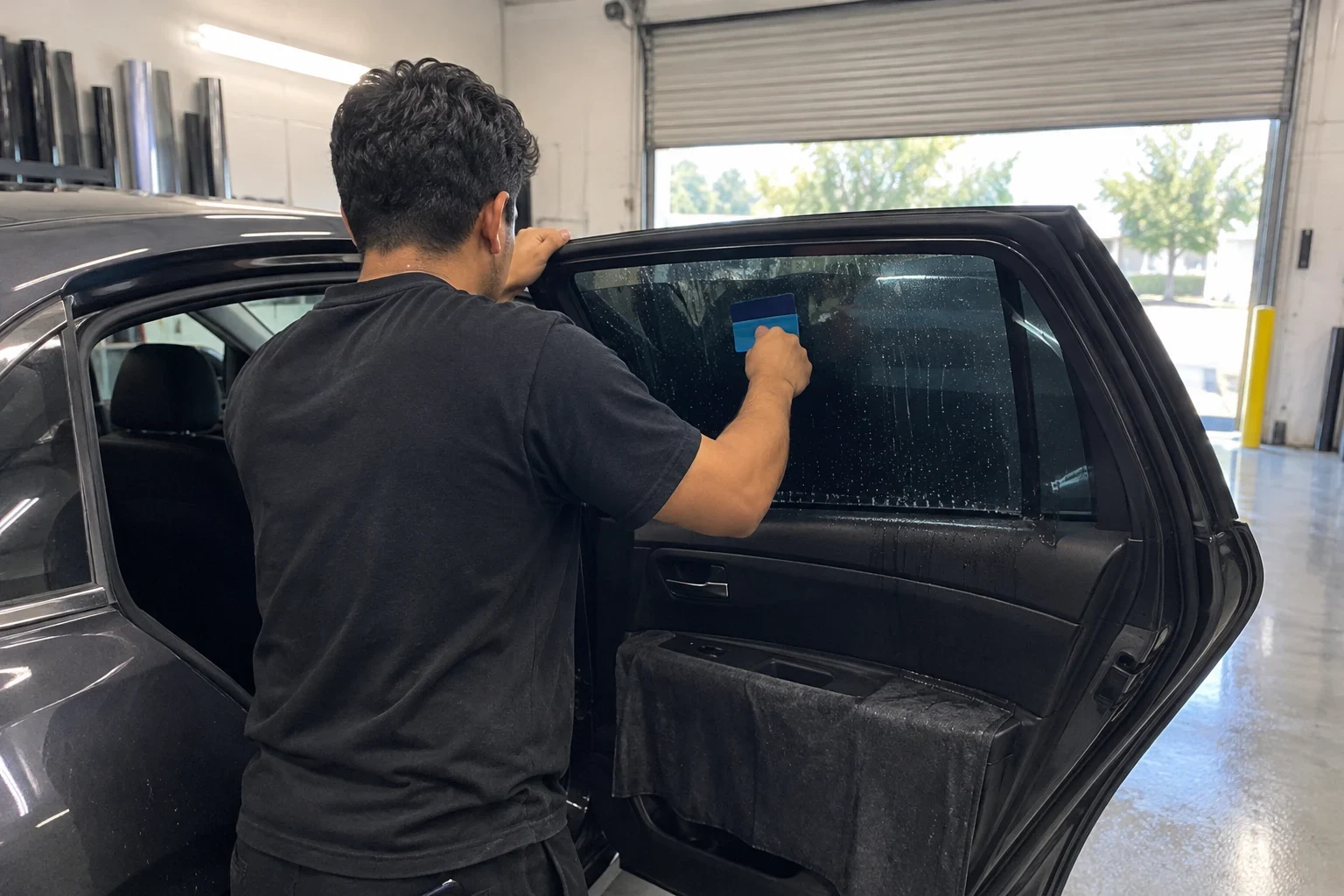
How Window Film Works on Your Car
Tint is a thin polyester sheet with a scratch-resistant coat on the outer face and adhesive on the inner one, and the material in the middle sets its performance. Dyed film soaks up light and turns purple as it ages. Carbon film keeps its color and turns away more heat. Ceramic film relies on metal-free nano-particles to block infrared heat without making the glass much darker or disrupting phone, GPS or keyless entry signals.
Tint pays off most before the interior has sat through several summers. UV wears down dash vinyl, leather and seat stitching, and that wear is permanent. We opened our shop 6 years ago, and the installer cutting and applying film on your windows has done it for 15 years. If the car is new, ask about adding paint protection film or ceramic coating so everything is protected in a single planned visit.
What Comes With Every Tint Job
- Picking the film and shade
- We hold carbon and ceramic samples up to actual glass and walk through each one's heat rejection figures. You see what a 35% or 20% shade looks like from outside before we cut anything.
- Legal front side windows
- California sets tight light limits on front side windows, and the factory glass already cuts some light. We factor that in so the film on your front doors keeps the car legal.
- Cleaning the glass
- We scrape and clean each window and wipe the door seals, since one speck of dust trapped under the film shows up as a bump.
- Film cut to your glass
- Each piece is cut to the exact shape of your windows and trimmed close to the edges. On curved back glass we heat-shrink the film so it sits flat with no fingers or creases.
- Stripping old tint
- Faded or bubbled film gets steamed and peeled off, and we clean away the glue it leaves. On the back glass we take care around the defroster lines.
- Sun strip on the windshield
- A non-reflective band across the top of the windshield cuts glare when the sun sits low. To protect the whole windshield from chips, see our windshield protection film.
Signs It's Time to Tint or Re-Tint
Purple or faded film
Dyed film loses its dye under UV. Once it turns purple, it is blocking very little heat.
Bubbles and peeling edges
Bubbling means the adhesive has failed. It will not settle back down, and it makes the view through the glass harder to read at night.
A cabin too hot to touch
If the steering wheel and seat belt buckle are painful to grab after the car sits in a summer parking lot, the glass is letting in too much infrared heat.
Cracking dash or fading seats
These are signs of long UV exposure. Quality film blocks the large majority of UV and slows this damage.
A fix-it notice for dark front film
If a previous install went too dark on the front doors, we can remove it and install a legal shade.
What Sets the Cost of Tinting
The price comes down mainly to which film you pick and how much glass your car has. We quote over the phone once we know the vehicle, so you have time to plan instead of deciding at the counter.
Kind of film
Ceramic and IR ceramic films are priced above carbon, since their nano-ceramic layer turns away more heat at the same darkness.
How many windows
A coupe has less glass than an SUV with rear quarter windows, and a sharply curved back window takes more time to shrink and fit.
Taking off old tint
Removing worn-out film and its glue adds hours, most of all on a rear window with defroster lines.
Extras
Adding a sun strip on the windshield or tinting a sunroof means more film and more time.
How the Day Goes at Our Shop
- 1
Talk it over by phone
We learn about your car, any film already on it and what you care about most: heat, privacy or appearance. You leave the call with a quote and a drop-off time.
- 2
Drop the car off for prep
Once the car is at our shop, we clean the glass, strip old film if there is any and cover the door panels and electronics against the slip solution.
- 3
Applying the film
Each piece is first shaped on the outside of the window, then moved to the inside. We squeegee from the middle out to push the slip solution and air to the edges so the adhesive lies flat. When you drop off, we give you a pickup time based on how much glass your car has.
- 4
Cure time and pickup
We explain aftercare before you go. Keep the side windows closed for a few days while the adhesive sets. Light haze or small water bubbles are normal and fade as the film dries.
Common Tint Questions
What is the legal tint limit in California?
The front side windows have to pass most visible light, so any added film must be light enough that glass and film combined stay within that limit. With two outside mirrors, the rear side windows and back glass can usually go darker. On the windshield, only a non-reflective strip across the top few inches is allowed. We cover the details for your vehicle in the consultation.
Does ceramic film justify costing more than carbon?
If a hot cabin is your main complaint, ceramic usually earns its price. The nano-ceramic layer rejects more infrared, the part of sunlight that heats your skin and the seats, and it manages that at a lighter shade. Carbon still stops UV, adds privacy and keeps its color, so it is the sensible pick when cost counts more than top heat rejection.
Does tint block phone or GPS signals?
Films with metal in them can weaken cell, GPS and keyless entry reception. Our carbon and ceramic films are metal-free, so that is not an issue.
How long before I can lower the windows?
Leave the window switches alone for a few days so the adhesive can grip the glass. Cool, wet weather makes that take longer, and hot weather speeds it up. Lower a window while the film is still soft and the felt channel in the door can catch the bottom edge and lift it, and that piece then has to be replaced.
Can you tint over old film already on my car?
We can tint the car, but not on top of the old tint. We strip the existing film and every trace of its adhesive first. Mention any old film when you call so we can set aside time for removal.
Plan Your Tint Before the Heat Sets In
Tell us your car and what you want from the film, and we will recommend a shade and film type with a clear quote. We tint cars from Antelope, Roseville, Citrus Heights and nearby towns at our shop.